

Every parent remembers their child’s first word. The way it slipped out almost by accident, then suddenly became the only word they’d say for a week straight. But what happens when those words take longer to show up than you expected? Or when they come, but nobody outside the family can quite understand them?
This is one of the quietest worries parents carry. Nobody talks about it at the school gate the way they talk about sleep schedules or fussy eaters, but almost every parent wonders about it at some point.
Here’s the part that doesn’t get said enough: speech delays are common, they’re manageable, and catching them early changes everything. At Kids Joy Green Planet, speech therapy isn’t something we bolt on as an extra service. It’s stitched into the everyday rhythm of preschool, because how a child communicates shapes nearly everything else they go on to learn.
Kids Don’t Read the Milestone Charts
There’s a general roadmap most pediatricians and educators work from — first words around 12 months, two-word phrases by two, short sentences by three. Useful as a guide, but kids have a way of ignoring timelines that don’t suit them.
When a child falls behind these markers, it rarely means something is broken. More often, it’s one of a few things:
- A naturally slower pace that evens out on its own
- Something hearing-related getting in the way of how sounds register
- A genuine speech or language difference that responds well to support
- Simply not enough back-and-forth talking happening day to day
The hard part for most parents isn’t spotting that something feels different. It’s knowing what, if anything, to do about it — and how quickly.
Why “Early” Isn’t Just a Buzzword
Here’s something worth knowing: a child’s brain is at its most flexible for language between birth and age five. Neuroscientists call this neuroplasticity, but you don’t need the jargon to understand the takeaway — this is the window where new skills click into place fastest.
That’s the entire case for early intervention, really. Start the support during preschool rather than waiting until primary school, and you typically see:
- Quicker progress, often with fewer sessions overall
- More confident kids, because they’re not spending every day feeling a step behind their friends
- Stronger academic footing later, since language underpins reading and writing before either of those even begin
- Less frustration and fewer meltdowns that come from simply not being able to say what they mean
Start early, and the gap you’re closing is small. Wait, and it tends to grow.
What Speech Therapy Actually Looks Like in a Preschool
Most parents picture speech therapy as flashcards and repetition in a clinical room. In a preschool setting, it’s nothing like that — and honestly, it shouldn’t be.
At Kids Joy Green Planet Preschool in Ajman , here’s how it actually plays out:
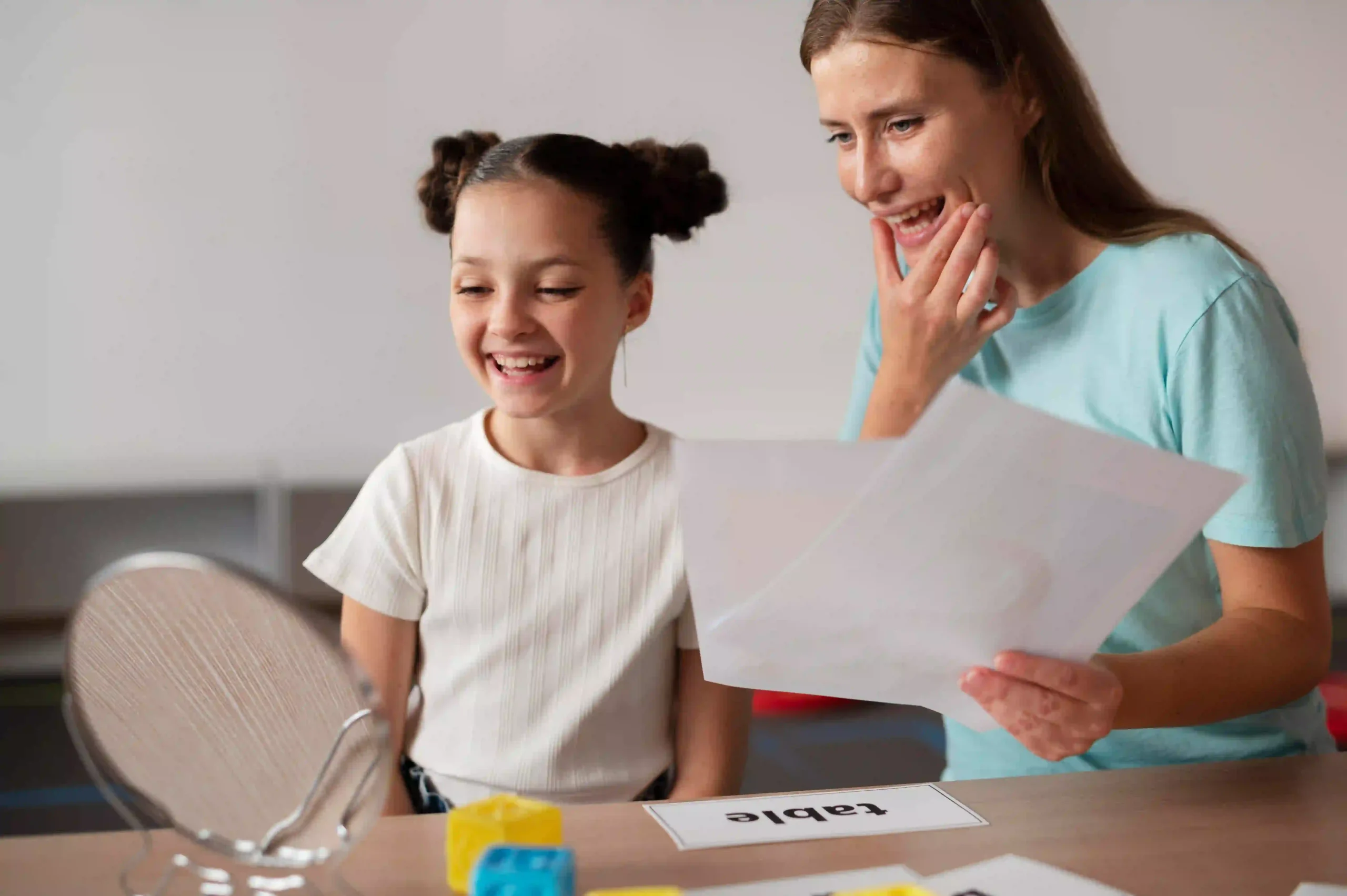
It happens through play. Vocabulary and sentence structure build through games, stories, and pretend play — not worksheets.
It happens in groups. Preschool is naturally social, so kids practice real conversation with their classmates, not just with a therapist across a table.
One-on-one when it’s needed. Some children need more focused attention, and that runs quietly alongside everything else, so nobody feels pulled out or singled out.
Progress gets watched closely. We track how each child is doing over time, which means small concerns get noticed before they become bigger ones.
Kids respond better in settings where they’re relaxed and just being kids. That’s really the whole logic behind doing this inside a preschool rather than a clinic.
Signs Worth Paying Attention To
You don’t need a background in speech pathology to notice when something seems off. A few things worth keeping an eye on:
- A noticeably smaller vocabulary than other kids the same age
- Trouble putting together simple sentences by age three
- Strangers (not just family) struggling to understand what they’re saying
- Frustration or tantrums that seem to come from not being able to get their point across
- Going quiet in group settings rather than joining in
None of this means panic. It just means it’s worth a conversation with your child’s teacher, who’s watching them in a learning environment every single day and will notice things you might not.
Why Preschool Is the Right Place for This
Speech doesn’t grow in a vacuum. It grows through interaction — during storytime, at snack time, in the middle of an argument over whose turn it is on the slide. A normal preschool day is packed with dozens of these small moments, one after another.
That’s exactly why building speech therapy into preschool life works so well. Instead of thirty minutes of focused support once a week, a child gets that reinforcement woven through an entire day, in a setting that feels like play rather than treatment.
It also means the people working with your child are talking to each other. If a speech therapist notices a child lighting up during a certain kind of storytelling, that gets passed straight to the classroom teacher — so the support stays joined-up rather than scattered across different rooms and different adults.
If You’re Worried, You’re Not Overreacting
If you’ve caught yourself quietly comparing your child’s speech to their classmates, or wondering whether you should bring it up — trust that instinct. It usually means something.
Here’s the reassuring part: speech delays, caught early, are among the most treatable things in early childhood. Most kids who get timely support go on to talk, play, and learn right alongside their peers — and often catch up faster than parents braced themselves for.
It doesn’t start with a diagnosis. It starts with a conversation — with your child’s teacher, with a specialist, or with us.
At Kids Joy Green Planet, a trusted preschool in Ajman, speech therapy isn’t a separate clinical service tacked on the side — it’s woven into everyday preschool life. If you’d like to talk through your child’s speech development with our team,get in touch . No pressure, no commitment — just a conversation.